My journey into Organizational Effectiveness wasn’t born out of formal studies, but out of necessity.
The earlier part of my Human Resources career was spent in Learning and Development. I had the unique opportunity to build the L&D function from the ground up in four different organizations across vastly different industries. In those early days, my focus was on growth, skill-building, and knowledge transfer. However, I quickly realized that training in a vacuum doesn’t move the needle.
When I first accepted a role with “Organizational Effectiveness” in the title, I’ll admit the term felt abstract. But I had a guiding principle: any program I implemented had to generate impact for the business.
The Mining Industry: A Catalyst for Systems Thinking
It was during my tenure in the mining industry that my perspective shifted from individual performance to systemic health. In such a high-stakes, capital-intensive environment, “good ideas” aren’t enough—they must be integrated into the mechanical and human architecture of the business.
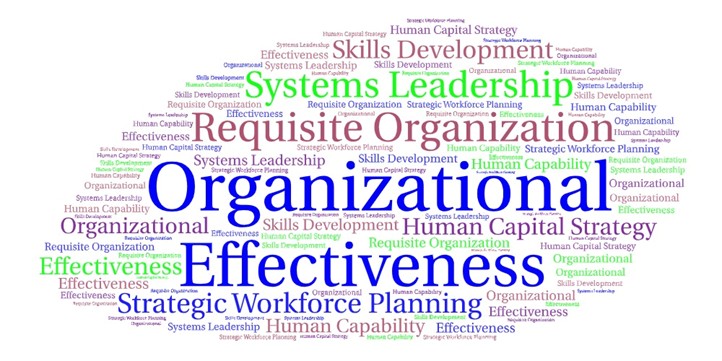
Through collaboration with various global consulting groups and exposure to rigorous methodologies, I began to hone a multidisciplinary toolkit. I moved beyond just “training” and began mastering the levers that drive organizational performance:
- Requisite Organization & Systems Leadership: Understanding how levels of complexity and clear accountability structures dictate success.
- Integrated Talent Management: Moving past silos to ensure the entire employee lifecycle supports the business strategy.
- Strategic Workforce Planning & Human Capital Strategy: Aligning the “people math” with the long-term financial and operational goals of the organization.
Defining Organizational Effectiveness
These experiences taught me that OE is not a “soft” HR function. It is the bridge between strategy and execution.
Based on my career building these functions, I define Organizational Effectiveness as the strategic integration of an organization’s structure, leadership frameworks, and talent systems to ensure they are not just “functioning,” but are actively driving the strategic objectives of the business.
Looking Ahead
While this article defines my overarching philosophy of Organizational Effectiveness, a definition is only as good as the tools used to achieve it. In my upcoming posts, I will be expanding on my experience with the various methodologies that have shaped my practice. We will explore how frameworks like Requisite Organization, Systems Leadership, and Strategic Workforce Planning serve as the essential levers for the “strategic integration” I’ve described here.
I look forward to sharing how these methodologies can be applied to bridge the gap between human potential and organizational impact.
Let’s Connect
Defining effectiveness is the first step; achieving it is a journey of strategic integration. If your organization is struggling to align its human systems with its long-term goals, let’s start a conversation about how these methodologies can generate the impact you need.