Peter Drucker famously noted that “what gets measured gets managed.” In my previous post, we discussed the Business Planning Process; today, we look at the scoreboard: Key Performance Indicators (KPIs) and Reporting.
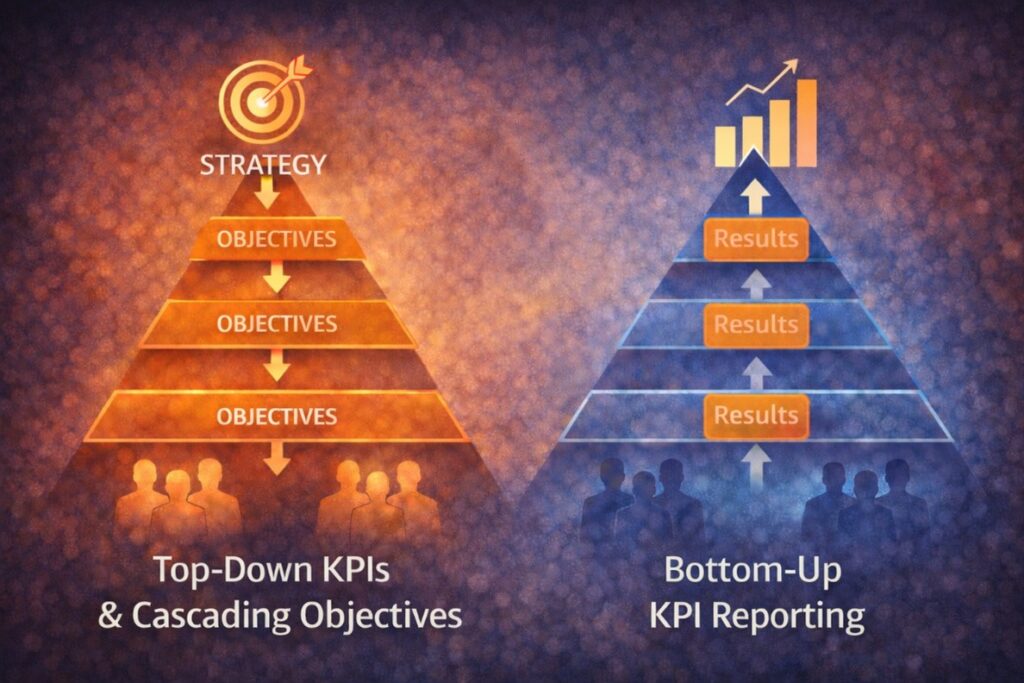
In sectors like mining and manufacturing, it often feels like everything is “pushed down” from the top. While it’s true that Direction and Strategy must cascade downward, the most effective organizations realize that Reporting is a bottom-up power.
The Cascade vs. The Feedback Loop The “Top-Down” cascade tells people what to do. The “Bottom-Up” reporting tells leadership if it’s working. Accurate reporting from the front line provides the vital data executives need to make informed, year-over-year adjustments to the strategy.
The Three Pitfalls of KPIs:
- Too many KPIs: Tracking too many KPIs leads to confusion on what is most critical.
- Lack of Clarity: Vague metrics lead to vague reporting.
- The “Why” Gap: If a front-line employee doesn’t understand why their metric matters, the data reported loses its strategic value.
How I Help: At O Consulting, I help leaders move from “compliance” to “clarity.” I advise leaders on how to establish effective KPIs and how to communicate and cascade them, so every level of the organization understands exactly what needs to happen.
Furthermore, I help organizations develop Performance Management Systems that enable the seamless cascading of goals and the high-quality reporting required to stay on course.
Next up: We will talk about the importance of end-to-end KPIs across the entire operation and how setting up measurement and rewards can help break down silos. (Cross-functional alignment will be coming up in a future post when we dive into Systems and Structure!)