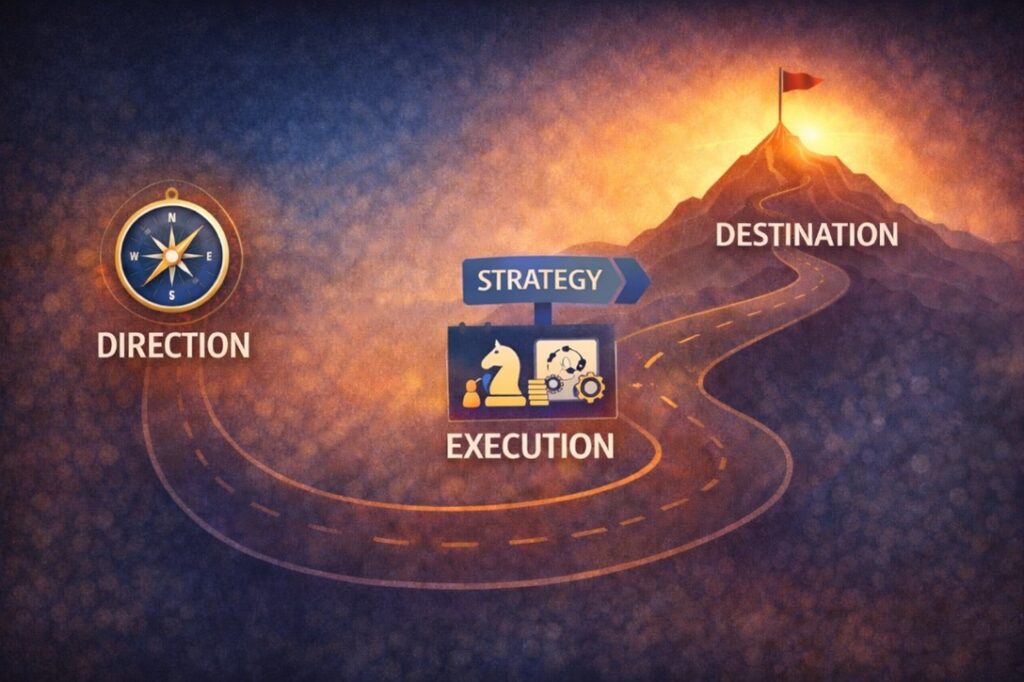
In my last post, we discussed Direction. Effective organizations share direction publicly by defining elements like Vision (where they are headed) and Purpose (why they exist). But even the most inspiring Purpose can leave an organization spinning its wheels if it lacks a Strategy.
While Direction sets the destination, Strategy defines the intentional steps you take to get there, all with keeping the end in mind.
Movement vs. Maintenance Many organizations, especially smaller owner-operated ones, often find themselves trapped in an operational loop. Their focus is solely on the “now”—the daily manufacturing, mining, or service delivery. Without a documented strategy, they aren’t actually advancing; they are simply repeating the same thing year over year.
Strategy is what prevents that cycle. It defines the key strategic goals, so the organization grows and evolves toward the Vision, rather than just existing within it.
The Strategic Cascade The most effective organizations I’ve worked with utilize a rolling 3-to-5-year strategy. This isn’t a static plan; it is an annual cycle that:
- Identifies the multi-year objectives needed to advance the business.
- Adjusts annually to reflect the current landscape.
- Assesses the risks associated with the current circumstances.
- Feeds directly into operational planning.
How I Help: Defining where you want to go is the first step. Defining how your people and systems will move you there is where the work begins. At O Consulting, I help organizations build the People Systems that align with their strategic objectives, ensuring that “growth” isn’t just a buzzword, but a measurable result of your team’s efforts.
Next up: We will dive into operational planning with a focus on people and performance.